Overview
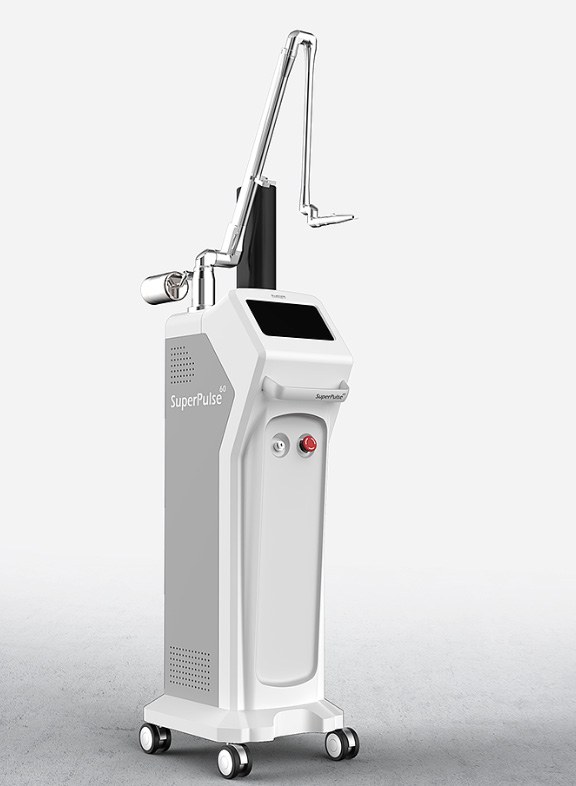
What separates aesthetic lasers from industrial and telecom equipment is a combination of three demands on the fiber: high peak power, a wide wavelength spread, and an end face that repeatedly absorbs high energy density. One console may output both 1064 nm and 532 nm, while a fractional platform runs at 2940 nm — and their fibers are not interchangeable.
So aesthetic fiber is not simply "a silica fiber". Selection always starts with wavelength: it determines the core material (standard or low-OH), whether silica works at all, and how long the run can be. Core size comes second, setting spot size and power density. Connector comes third — it has to match the console coupling, or light never gets in.
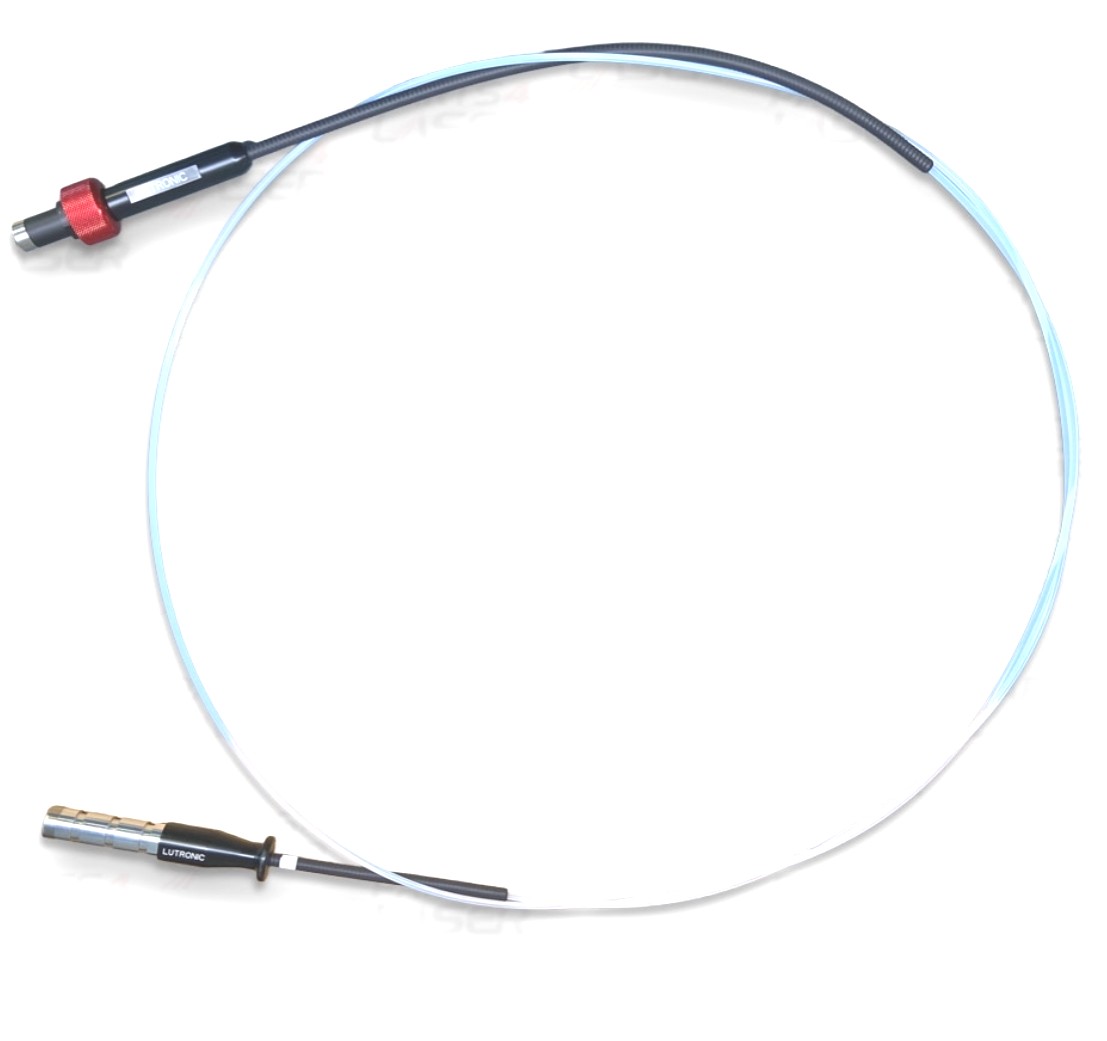
FiberKinZ supplies delivery fiber and finished handpiece cables for aesthetic consoles across the main wavelengths, with connectors built to the OEM interface including D80, Deka, Candela, Cynosure, Fotona and Quanta forms.
Wavelength Drives the Fiber
| Wavelength | Source | Typical application | Transmission solution |
|---|---|---|---|
| 532 nm | Nd:YAG frequency-doubled (KTP) | Vascular lesions, pigmentation, tattoo | Silica fiber, standard OH |
| 755 nm | Alexandrite | Hair removal, pigmented lesions | Silica fiber, standard OH |
| 808 nm | Diode | Primary hair removal wavelength | Silica fiber, large core, high power |
| 1064 nm | Nd:YAG | Pigmentation, tightening, tattoo, vascular | Low-OH silica fiber |
| 2940 nm | Er:YAG | Fractional resurfacing, scars, acne pits | Ultra-low-OH silica, short run mandatory |
| 10600 nm | CO₂ | Resurfacing, cutting, vaporization | Hollow-core fiber or articulated arm — not standard silica |
The critical judgement: 2940 nm sits on a strong water absorption peak, and hydroxyl in silica absorbs the energy and converts it to heat, so ultra-low-OH fiber and the shortest practical run are mandatory. 10600 nm is entirely outside silica's transmission range and can only use hollow-core fiber or a mechanical arm — we do not offer a silica solution for that band and will say so directly.
Platform Interface Compatibility
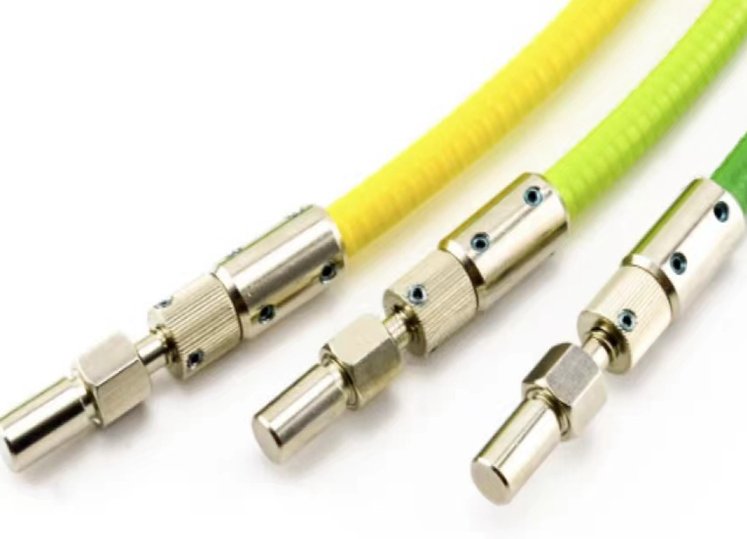
Aesthetic connectors are vendor-defined. Two connectors may both look like SMA905 while differing in thread, ferrule bore and strain-relief length. Our approach is to build to the OEM interface rather than force a "universal" part.
| Platform | Common console types | Matching method |
|---|---|---|
| D80 | Diode hair removal, multi-platform | Connector built to D80 interface spec |
| Deka | Fractional, pigmentation, hair removal | Matched by original fiber part number |
| Candela | Alexandrite, pulsed dye | Matched by original fiber part number |
| Cynosure | Nd:YAG, fractional, hair removal | Matched by original fiber part number |
| Fotona | Er:YAG, Nd:YAG | Matched by original fiber part number |
| Quanta | Multi-application laser platform | Matched by original fiber part number |
Console model plus original fiber part number (or connector drawing and photo) is enough to match. Interfaces can change between console generations, so matching by part number is the safest route.
Specifications
| Item | Aesthetic laser fiber |
|---|---|
| Wavelength coverage | 532 / 755 / 808 / 1064 / 2940 nm (core material selected by wavelength) |
| Core material | Standard-OH / low-OH / ultra-low-OH silica |
| Standard core sizes | 200 / 300 / 400 / 600 / 800 / 1000 µm |
| Numerical aperture | Per supply datasheet, matched to console coupling optics |
| Length | Built to handpiece, typically 2–5 m |
| Connector | SMA905 and D80 / Deka / Candela / Cynosure / Fotona / Quanta platform interfaces |
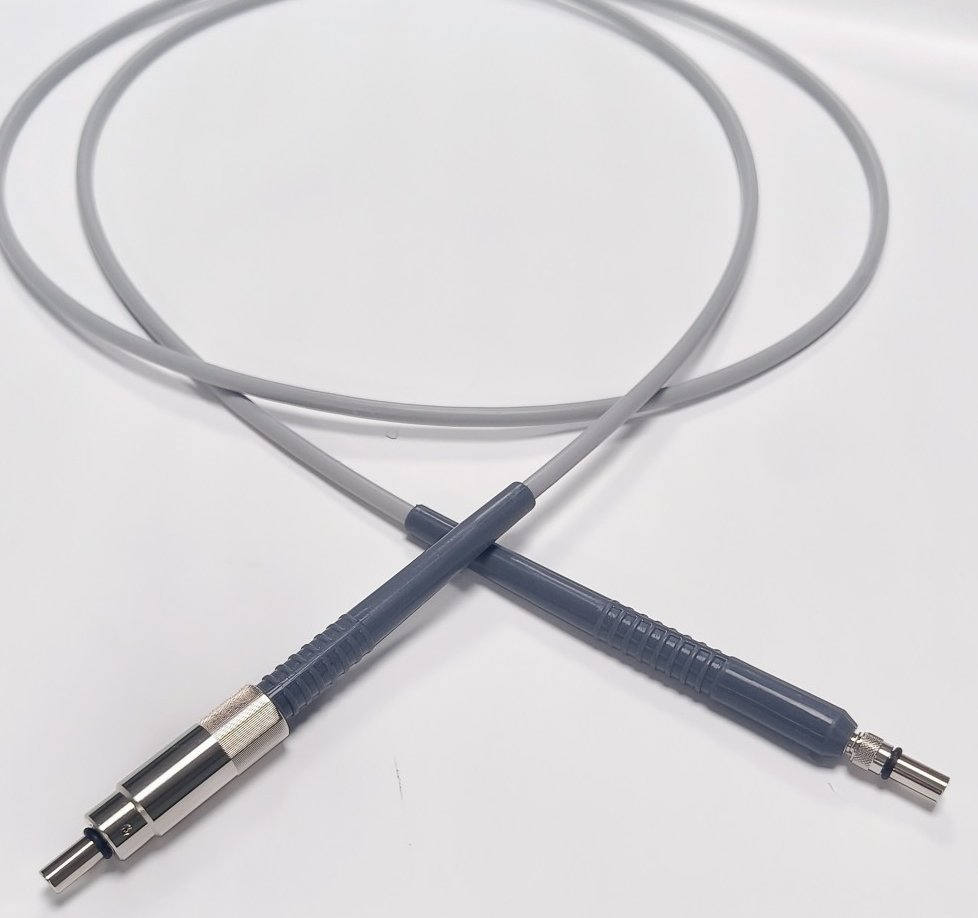
| Jacket | PVC / silicone / stainless steel armor (crush and repeated-bend resistance) |
| End face | Coating stripped and polished; quartz end cap optional for high power |
| Supply form | Bare fiber / terminated handpiece cable |
Loss, power handling and end-face damage threshold vary by batch and wavelength. Send your console energy parameters and usage pattern for the matching data.
Applications
Laser Hair Removal
808 nm diode and 755 nm alexandrite platforms. Large-core fiber with large-spot handpieces, prioritizing coverage speed and energy uniformity.
Pigmentation & Tattoo
532 nm and 1064 nm Q-switched lasers. Short pulses with high peak power place the highest demand on end-face quality — degradation shows up immediately as energy loss.
Fractional Resurfacing
2940 nm Er:YAG. Ultra-low-OH fiber over a short run, where fiber length and end-face treatment directly determine delivered energy.
Tightening & Vascular
1064 nm long-pulse. Low-OH fiber with a large core balances penetration depth and energy density.
Handling Notes
1. End-face cleanliness matters most. Coupling gel residue, dust or tissue debris carbonizes instantly under high peak power and pits the end face. Inspect and clean before and after every use.
2. Strip the output-end coating completely. Residual polymer absorbs laser light, carbonizes and spreads inward, eventually destroying the cladding. Strip to the length the console specifies.
3. Do not go below the minimum bend radius. Handpiece cables get pulled and kinked in use; over-bending leaks light, causes local overheating and eventually breaks the fiber.
4. Replace when the end face whitens or pits. Aesthetic fiber is a consumable — the symptom is weaker clinical effect at the same settings and steadily rising power demand.
5. Never share fiber across wavelengths. 532 nm and 2940 nm use fundamentally different core materials; mixing them destroys the fiber.
Matching Products
| Accessory | Details | Page |
|---|---|---|
| SMA905 connector | Stainless steel or ceramic ferrule, 3/8-24 UNF thread | View |
| Aesthetic laser connector | D80 / Deka / Candela / Cynosure / Fotona / Quanta compatible | View |
| Aesthetic fiber patch cord | Finished handpiece cable, cut to length, armor optional | View |
| Medical solutions | Medical and aesthetic optical path solutions | View |
Frequently Asked Questions
Can one fiber type handle every aesthetic laser wavelength?
No. 532, 755, 808 and 1064 nm all sit inside the silica transmission window and can use standard or low-OH silica fiber. 2940 nm (Er:YAG) falls on a strong water absorption peak and requires ultra-low-OH silica with a short transmission length. 10600 nm (CO₂) cannot pass through standard silica at all and needs a hollow-core fiber or an articulated arm. Wavelength is always the first selection step.
Will the connector match our existing aesthetic console?
Yes. We build connectors to the OEM interface, including D80, Deka, Candela, Cynosure, Fotona and Quanta forms. Send the console model, the original fiber part number, or a connector drawing, and we match the locking method, ferrule bore and strain-relief dimensions.
Why do aesthetic fibers burn their end faces so easily?
Aesthetic lasers deliver high-energy short pulses with very high peak power density. Any coupling gel residue, dust, tissue debris or poor polish on the end face causes localized absorption and an instant temperature spike, leading to pitting or shattering. If coating is not fully stripped at the output end, the polymer absorbs laser light and carbonizes inward.
How do I choose the core size?
Core size sets spot size and power density. Small cores (200–400 µm) concentrate energy for precision and spot treatment; large cores (600–1000 µm) cover area faster for hair removal and resurfacing. It must also match the console optics and handpiece interface — power alone is not enough to decide.
Is the fiber a consumable, and how often should it be replaced?
Yes, it is a consumable. Replacement interval depends on console energy, usage frequency and end-face care — there is no universal number. Judge by end-face condition and output efficiency: whitening, pitting, burn marks, or needing higher energy to achieve the previous clinical effect all indicate replacement.
Can you build to our specification?
Yes. Core size, length, connector type, end-face treatment and jacket (including armor) are all built to project. Volume orders can follow the OEM drawing, and samples can be supplied for console validation first.
Need an aesthetic fiber sample or interface match?
Send the console model, original fiber part number, wavelength and energy parameters — we will specify core size, connector and end-face treatment and quote accordingly.
Request a Quote