Overview
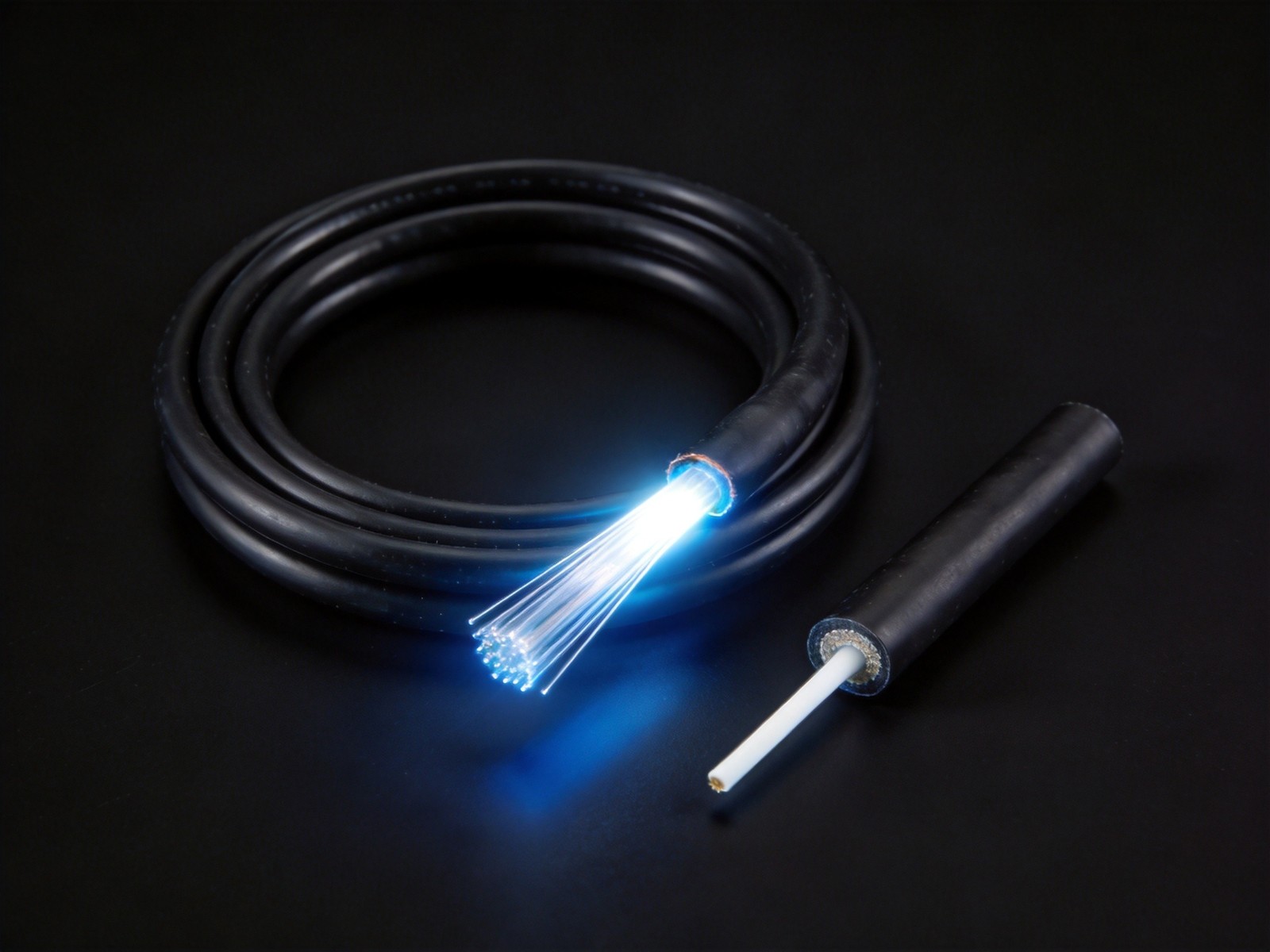
POF (plastic optical fiber) uses a PMMA (polymethyl methacrylate) core with a fluoropolymer cladding in a step-index structure. What separates it from silica fiber is not really the material but how it is used: cores run from 0.25 mm to 3.0 mm — tens of times larger than silica — and a cleaved end pushed into a connector simply works. No fusion splicer, no polishing, no specialist crew.
The trade-off is attenuation. POF runs at roughly 0.15–0.25 dB/m in the 650 nm window, two to three orders of magnitude above silica, which makes it naturally suited to runs within about 100 metres: inside equipment, rack-to-rack patching, automotive harnesses, lighting guides and short-range sensing.
FiberKinZ has worked the full POF chain since 2013 — fiber, connectors, patch cords and light sources all in-house — so fiber and connector are supplied together and loss is our joint responsibility. Customers do not have to reconcile specifications across several suppliers.
Core Size Range
Core diameter is the first selection parameter — it sets light throughput, bend radius and connector size at the same time. The sizes below are standard stock; non-standard dimensions are built to order.
| Core diameter | Typical cladding OD | Light output | Min. bend radius | Typical use |
|---|---|---|---|---|
| 0.25 mm | 0.50 mm | Low | ≈2.5 mm | Sensing, industrial control signals, small light guides |
| 0.50 mm | 1.00 mm | Low | ≈5 mm | Sensing, in-equipment wiring, short-range data |
| 0.75 mm | 2.20 mm | Medium | ≈8 mm | General light guides, automotive harness |
| 1.0 mm | 2.20 mm | Medium | ≈10 mm | General-purpose workhorse, lighting and control |
| 1.5 mm | 2.20 mm | High | ≈15 mm | Decorative lighting, high-flux light guides |
| 2.0 mm | 2.20 mm | High | ≈20 mm | Decorative lighting, side-glow effects |
| 3.0 mm | 3.00 mm | Highest | ≈30 mm | Maximum output over short runs, rugged installations |
Cladding and jacket outer diameters vary by construction; the table shows common combinations. Request the matching datasheet for exact dimensions.
Construction and Jacket
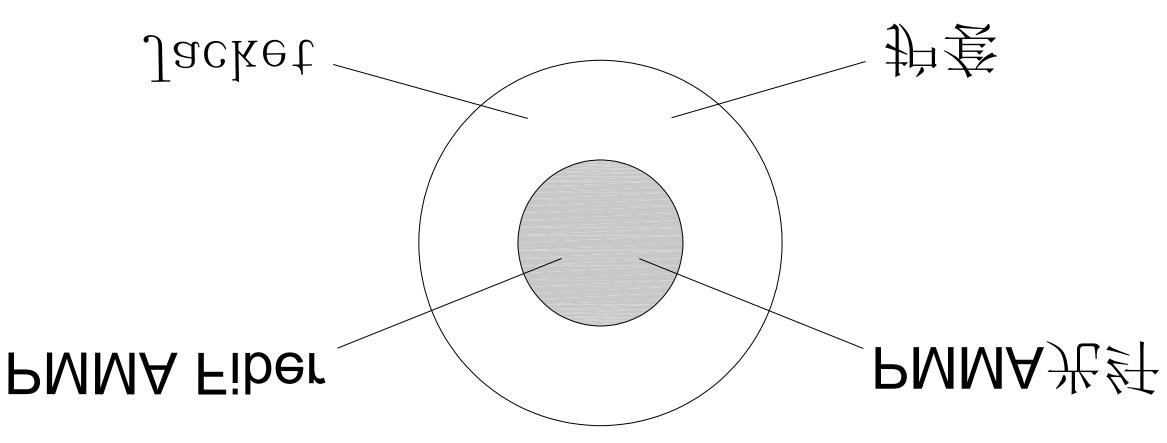
Standard POF is a three-layer construction: PMMA core (light transmission) → fluoropolymer cladding (creates the refractive index step that confines light) → jacket (mechanical and environmental protection). Jacket choice determines whether the fiber survives the installation.
| Jacket material | Common OD | Operating temperature | Characteristics and application |
|---|---|---|---|
| PE polyethylene | 2.2 / 3.0 mm | -40 to +70 °C | Flexible, good low-temperature performance, economical — general indoor and outdoor lighting runs |
| PVC polyvinyl chloride | 2.2 / 3.0 mm | -40 to +70 °C | Smooth surface, printable, flame retardancy adjustable — in-equipment wiring and patch cords |
| Flame-retardant PVC | 2.2 / 3.0 mm | -40 to +70 °C | Meets bunched-cable flame requirements — equipment rooms and public buildings |
| LSZH | 2.2 / 3.0 mm | -40 to +70 °C | Low smoke, no halogen acid gas — metro, tunnel, hospital |
| Bare fiber, no jacket | Per cladding OD | -40 to +70 °C | For conduit, bundling and inside finished cords — saves space |
Optical and Mechanical Properties
| Item | Typical value / note |
|---|---|
| Core material | PMMA (polymethyl methacrylate) |
| Index profile | Step index (SI) |
| Cladding material | Fluoropolymer |
| Numerical aperture | Approx. 0.5 (per datasheet) |
| Attenuation | Approx. 0.15–0.25 dB/m @ 650 nm (measured per batch) |
| Usable wavelength windows | 470 nm blue / 520 nm green / 650 nm red (lowest loss at red) |
| Continuous operating temperature | ≤ 70 °C, short-term ≤ 85 °C (jacket dependent) |
| Minimum bend radius | Approx. 10 × outer diameter |
| Practical transmission distance | Typically ≤ 100 m for data; light guides per flux requirement |
| Reference standard | IEC 60793-2-40 |
Values above are industry-typical ranges. Actual figures follow the supply-batch datasheet and test report; request measured attenuation curves where precision matters.
End-Glow vs. Side-Glow
End-glow POF
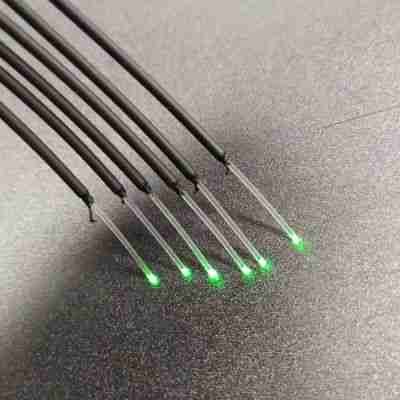
Light exits the end face with the cladding intact. Used for light guides, indicator illumination, sensor optical paths and medical light bundles. Demands a flat cleave and good connector alignment.
Side-glow POF
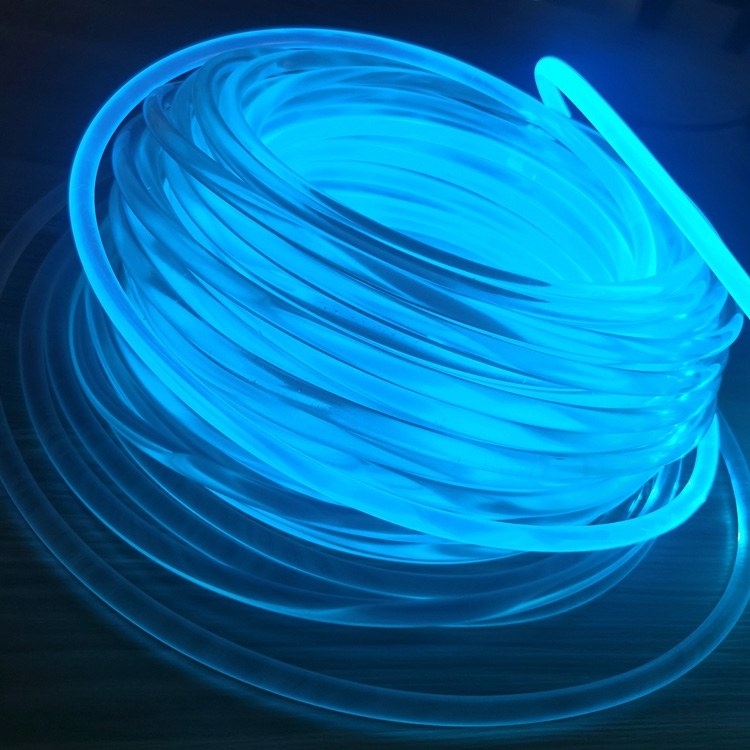
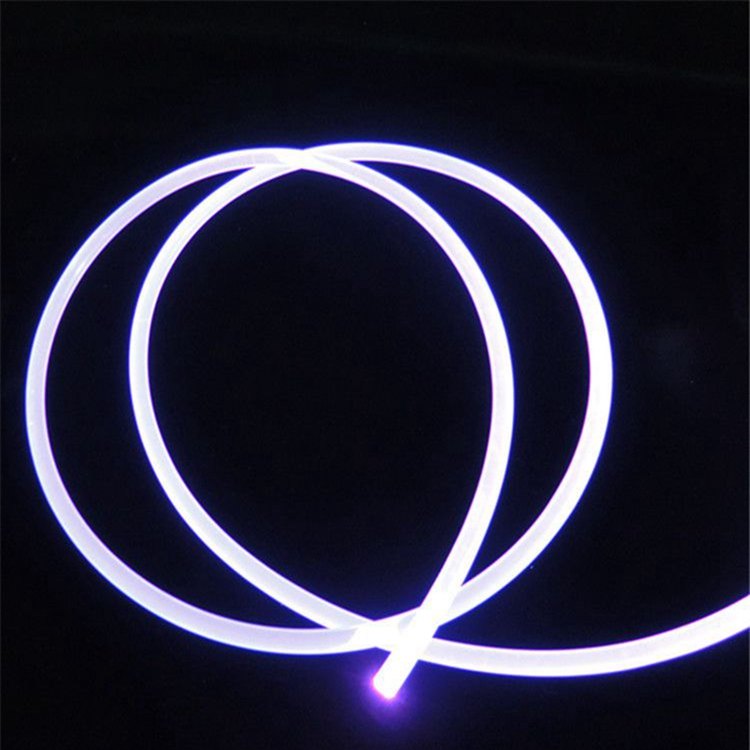
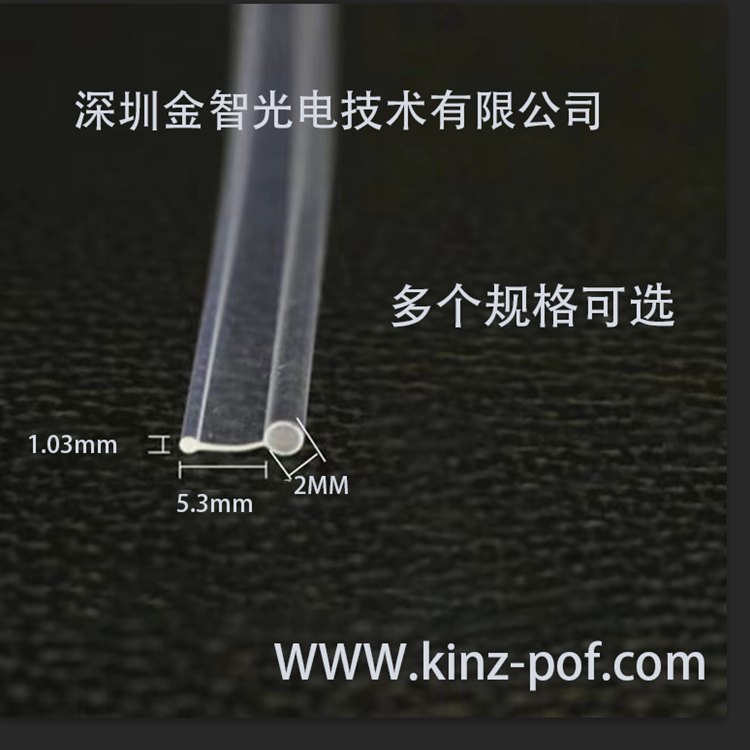
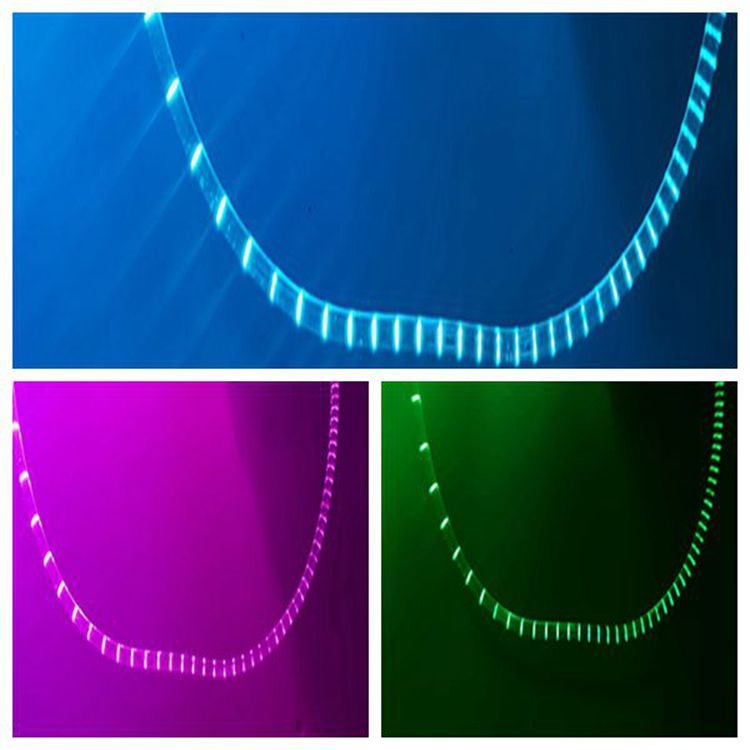
A treated cladding or skirt structure leaks light evenly along the full length. Used for star ceilings, contour outlining, ambient strips and shaped light guides. One spool cannot serve both purposes.
Applications
Lighting & Decoration
Star ceilings, ceiling features, landscape outlines, display case guides, water-feature light bundles — driven by LED light engines from 6 W to 16 W in RGB or single colour, with Bluetooth, remote or knob dimming.
Industrial Control & Signal
Short-range optical communication and isolated signal transfer between drives, servos and PLCs. Immune to EMI and non-conductive, so it can run alongside power cabling.
Automotive & Rail
Interior ambient lighting, MOST in-vehicle networks and sensor optical paths. Vibration and flex resistant; harnesses can be supplied terminated.
Sensing & Medical Guides
Displacement, level and colour sensing; endoscope cold-light bundles, dental and therapy light guides. Sterilizable jacket constructions available for medical use.
Matching Products
| Accessory | Details | Page |
|---|---|---|
| POF connectors | ST / SMA905 / SC / FC / LC POF interfaces, metal and plastic housings | View |
| POF patch cords | Simplex / duplex, custom lengths and connector combinations | View |
| LED light engines | 6 W–16 W, Bluetooth / remote / knob control, RGB mixing | View |
| Plastic fiber splitter | 1-to-N splitting for multi-point lighting and sensing | View |
Frequently Asked Questions
POF or silica fiber — how do I choose?
Look at distance, temperature and bandwidth. POF has a large core (0.25–3.0 mm), is easy to terminate, tolerates bending and vibration, and costs less, but attenuates at roughly 0.15–0.25 dB/m, so it suits lighting, control and sensing within about 100 m. Silica attenuates far less and handles higher temperature. For long-distance high-speed data choose silica or HPCF; for light, bending and fast field termination choose POF.
What are the core sizes used for?
0.25–0.5 mm for sensing, industrial control signals and small light guides; 0.75–1.0 mm is the general-purpose workhorse balancing light throughput and bendability, and is the most common size in automotive and lighting kits; 1.5–2.0 mm for high-flux decorative lighting and side-glow; 3.0 mm for maximum output over short runs and for rugged, abrasion-resistant installations. Larger cores deliver more light but need a larger bend radius.
How much temperature can POF take?
The PMMA core itself is temperature-limited: continuous operation is typically below 70 °C and short-term up to about 85 °C, depending on the jacket. PVC jackets run roughly -40 to +70 °C, PE handles low temperature better, and LSZH low-smoke zero-halogen suits areas with fire requirements. If ambient temperature stays above 85 °C, move to a silica fiber such as HPCF or large-core GOF.
What is the difference between end-glow and side-glow?
End-glow fiber emits from the end face and is used for light guides, illumination and sensing, and requires an intact cladding. Side-glow fiber uses a treated cladding or skirt structure to leak light evenly along its whole length, for star ceilings, contour outlining and ambient strips. One spool cannot serve both purposes — the application must be decided before selection.
How is POF connected — does it need splicing?
No splicing is needed. With its large core, POF is cut flat with a dedicated cleaver and pushed straight into the connector, using POF-specific ST, SMA905, SC or FC interfaces. Field termination takes minutes. Cleave quality directly determines loss, so a proper cleaver is mandatory — never scissors or side cutters.
What is the minimum bend radius?
Generally about 10 times the outer diameter — a 1.0 mm fiber should not go below a 10 mm bend radius. POF bends better than silica, but over-bending still leaks light, causes local heating and eventually breaks the fiber. Use bend reliefs or corrugated conduit at corners rather than forcing a hard fold.
Which standard applies?
The international POF standard is IEC 60793-2-40, which defines core diameter, cladding diameter, numerical aperture, attenuation and mechanical test methods. We supply to that classification and can provide attenuation and geometry test data on request.
Can jacket colour and length be customized?
Yes. Jacket material, colour, outer diameter, printing and spool length are all built to project, and fiber can be supplied as finished patch cords, terminated harnesses or complete lighting assemblies. Volume projects can be sampled and validated before production.
Need a POF sample or core-size recommendation?
Tell us the application (end-glow / side-glow / data), core size, length and ambient temperature — we will specify fiber, jacket and connector together and quote accordingly.
Request a Quote